

As industrial energy costs rise and emissions regulations tighten, businesses are seeking practical alternatives to conventional fuels. Biomass pyrolysis oil (bio-oil), produced from agricultural and forestry residues, offers a renewable liquid fuel that is easier to store, transport, and use than raw biomass. It can be integrated into existing systems such as industrial boilers, furnaces, and on-site heat generators, enabling a smoother transition to cleaner energy. Research from the National Renewable Energy Laboratory shows that bio-oils produced via pyrolysis can be used directly for heat or further upgraded into higher-value fuels such as renewable diesel and sustainable aviation fuel.
Beyond immediate energy use, biomass pyrolysis oil supports broader environmental objectives. The IEA Bioenergy highlights its role in converting organic waste streams into renewable energy, helping industries reduce greenhouse gas emissions and contributing to circular economy strategies.
This blend of practical energy value and environmental benefit makes biomass pyrolysis oil a strategic option for businesses exploring cleaner, more efficient fuel alternatives without major infrastructure changes. QleanTech’s biomass pyrolysis oil solutions are designed for seamless integration into existing industrial systems, providing a reliable and renewable alternative to fossil fuels.

What Is Biomass Pyrolysis Oil?
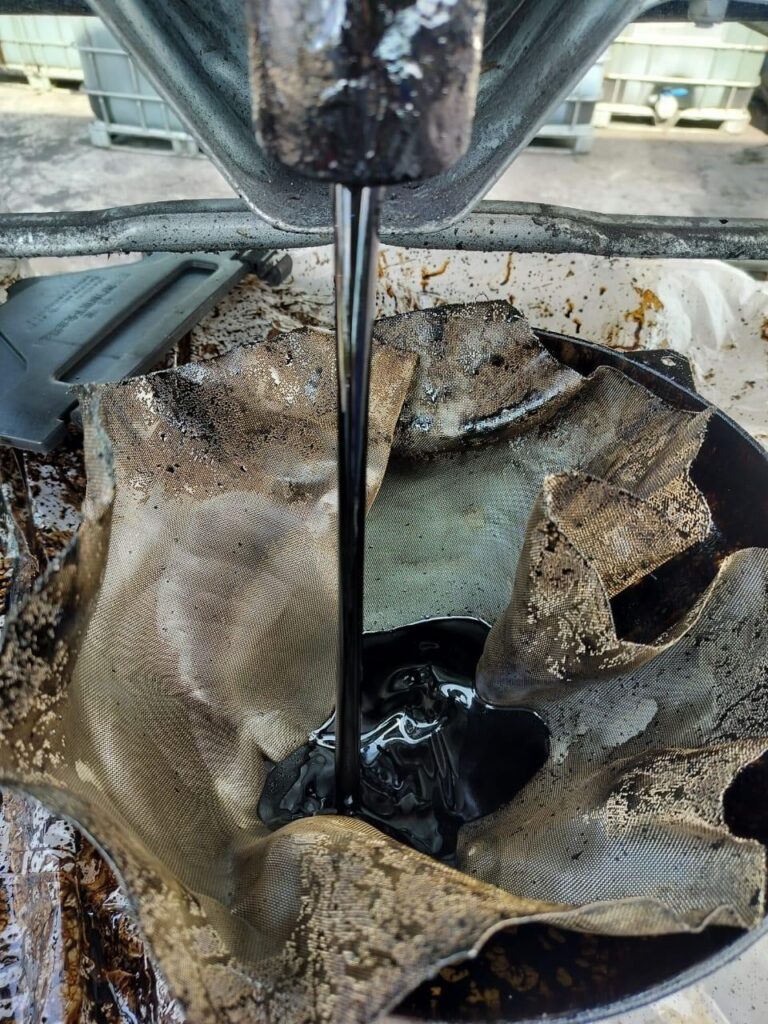
Biomass pyrolysis oil, also called bio-oil or pyrolysis oil, is a dark, energy-rich liquid obtained by heating organic materials — such as wood, agricultural residues, and other biomass — at high temperatures in an oxygen-free environment. This controlled thermal decomposition, known as pyrolysis, breaks down the biomass into smaller molecular compounds that are then rapidly condensed into liquid form.
According to research from the IEA Bioenergy, bio-oil is a complex mixture of hundreds of oxygenated compounds, including acids, ketones, aldehydes, phenolics, sugars, and water, which makes it chemically distinct from conventional petroleum-based fuels. Its high oxygen content, acidity, and relatively low stability mean that raw biomass pyrolysis oil is best suited for direct industrial heating applications. Alternatively, it can be upgraded through refining processes like hydrodeoxygenation to produce higher-quality fuels, such as renewable diesel or petrol, expanding its potential for sustainable energy solutions.
Industrial Use Cases and Applications
Biomass pyrolysis oil is particularly well suited for stationary energy applications where liquid fuels are already in use. Because it can be integrated into existing thermal systems with suitable burner assessment and, in some cases, moderate system modifications, many industries use it as a practical renewable alternative to conventional liquid fuels such as heavy fuel oil, and in some cases part of a broader transition away from fossil-based thermal energy. Fast pyrolysis bio-oil is already being applied commercially, including deployment in industrial boiler systems and district heating applications in several markets, demonstrating its viability as a renewable industrial fuel.
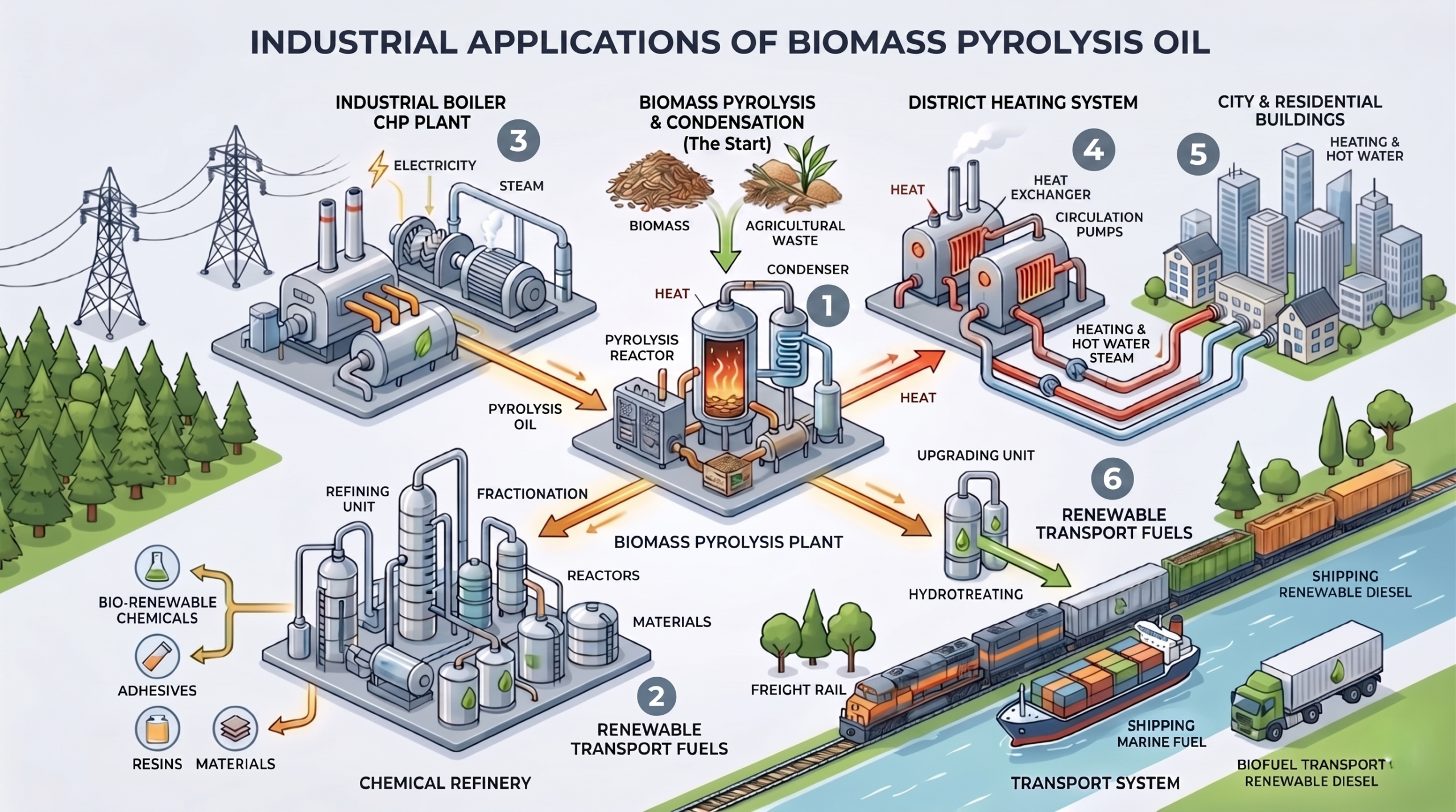
Common applications include industrial boilers and furnaces, cement and manufacturing plants, thermal energy systems, and on-site energy generation, where consistent heat supply is essential for operations. One of its key advantages is that it can often be adopted without major infrastructure changes, allowing facilities to gradually reduce fossil fuel dependence.
Biomass pyrolysis oil is also relevant for industrial dryers that rely on liquid-fuel-based process heat. In suitable systems, it can support steady thermal demand in drying operations while helping reduce dependence on conventional fuel oil. This is especially relevant in operations where dryers already run on liquid fuels and a renewable alternative is being considered without a full system overhaul. As with boilers and furnaces, burner compatibility, operating conditions, and fuel-handling requirements should be reviewed before implementation. Industrial process-heat case studies from IEA Bioenergy show that fast pyrolysis bio-oil can be used in high-temperature industrial heat applications, supporting its relevance for dryer-related heat demand.
In Malaysia, this potential is further strengthened by the country’s abundant biomass resources, particularly from the palm oil industry. Residues such as palm kernel shells (PKS) are widely available and have been studied as effective feedstocks for bio-oil production through pyrolysis. This local availability enables industries to tap into a regionally sourced, renewable fuel, supporting both energy security and circular economy initiatives.
As more industries explore biomass pyrolysis oil as a viable fuel alternative, selecting the right product and implementation approach becomes critical. Speak with QleanTech to evaluate whether biomass pyrolysis oil is suitable for your operations and get guidance on system compatibility and supply options.
Where Biomass Pyrolysis Oil Fits Best Today
Today, the strongest near-term fit for biomass pyrolysis oil is as a renewable substitute for heavy fuel oil in stationary thermal applications such as industrial dryers, boilers, furnaces, kilns, and selected cement or manufacturing burners where liquid fuels are already used. This is where biomass pyrolysis oil’s renewable feedstock, local sourcing potential, and lower sulfur profile can offer the clearest operational and environmental value.
For marine fuel and diesel-range fuels, the more accurate framing is a future upgrading pathway, not a blanket drop-in claim for raw bio-oil. NREL and other technical sources support upgrading pyrolysis-derived intermediates into higher-value fuels such as renewable diesel and sustainable aviation fuel, while recent NREL work also notes that biofuels can serve as blendstocks for marine fuels if fuel specifications are met.
To see the difference in real-world performance, watch this comparison of conventional fuel and biomass pyrolysis oil in an industrial setting:
Key Benefits of Biomass Pyrolysis Oil for Industrial Use
Biomass pyrolysis oil offers several practical advantages that make it an attractive option for industrial energy users seeking both efficiency and sustainability.
Renewable, Low-Carbon Fuel
Biomass pyrolysis oil is derived from renewable organic materials such as agricultural residues and forestry waste. Unlike fossil fuels, which release long-stored carbon, biomass is part of a shorter carbon cycle, helping reduce overall greenhouse gas emissions when used as an alternative fuel.
Turns Agricultural & Forestry Waste into Energy
It enables the transformation of low-value biomass waste — including palm residues, wood chips, and crop by-products — into a usable liquid fuel. This supports circular economy practices by turning waste streams into valuable energy resources instead of disposing of them.
Compatible with Existing Boilers & Thermal Systems
Biomass pyrolysis oil can be used in boilers, furnaces, and other thermal systems, often with minimal modifications. This allows industries to gradually transition away from fossil fuels without significant infrastructure changes.
Upgradable to Renewable Diesel and Sustainable Aviation Fuel
Research from the National Renewable Energy Laboratory shows that bio-oil can be further upgraded into higher-quality fuels such as renewable diesel and sustainable aviation fuel, expanding its long-term role in the transition to cleaner energy systems.
Why Low-Sulfur Biomass Pyrolysis Oil Matters
One of the practical advantages of biomass-derived pyrolysis oil is its low sulfur profile compared with many petroleum-derived fuels and sulfur-rich waste oils. NREL notes that lignocellulosic biomass typically contains very low sulfur, often below 0.1 wt%, while petroleum can range much higher, and some of the small sulfur fraction in biomass tends to remain in the char rather than the bio-oil. This matters because sulfur in fuel is closely tied to sulfur oxide emissions, fuel compliance, corrosion concerns, and odor-related handling issues.
This is one reason biomass pyrolysis oil can be positioned differently from tyre pyrolysis oil and some waste-oil-derived fuels. Waste tires contain sulfur, and reviews note that sulfur in tire pyrolysis oil is a recurring environmental and upgrading challenge. Waste lubrication-oil-derived diesel-like fuel also often requires desulfurization before wider fuel use. By contrast, biomass pyrolysis oil offers a lower-sulfur renewable pathway for suitable industrial heating applications.
Biomass Pyrolysis Oil vs Conventional Fuels
When selecting an industrial fuel, decision-makers must balance cost, infrastructure requirements, operational performance, and environmental impact. In this context, biomass pyrolysis oil presents a distinct alternative to conventional fuels such as heavy fuel oil and natural gas, offering both opportunities and trade-offs depending on the application.
| Factor | Biomass Pyrolysis Oil | Heavy Fuel Oil | Light Fuel Oil (Kerosene / Petrol) | Natural Gas |
|---|---|---|---|---|
| Feedstock Source | Renewable (biomass waste, e.g. PKS) | Fossil-based | Fossil-based (petroleum distillate from crude oil) | Fossil-based |
| Carbon Profile | Lower net emissions (short carbon cycle) | High emissions | Fossil-based emissions | Lower than oil, but still fossil |
| Infrastructure Needs | Compatible with many existing liquid fuel systems | Existing systems | Compatible with existing light liquid fuel systems; requires tanks, pumps, and burners suited to light distillates | Requires pipelines & gas systems |
| Price Stability | More stable with local sourcing | Highly volatile (global oil markets) | Highly volatile (global oil markets) | Volatile (linked to global gas markets) |
| Supply Chain | Can be locally sourced (e.g. Malaysia PKS) | Imported / global supply | Refinery- and petroleum-distribution-dependent; often imported / globally traded | Dependent on gas infrastructure |
| Energy Density | Comparable to heavy fuel oil in selected applications with proper filtration and post-processing | High | Very high | High by mass, lower by volume |
| Sulfur / SOx Profile | Typically low sulfur from lignocellulosic feedstocks | Can be sulfur-intensive unless compliant low-sulfur grade is used | Lower sulfur than heavy fuel oil in many regulated markets, but still fossil and specification-dependent | Very low sulfur at point of use |
In markets like Malaysia, where biomass feedstocks such as palm kernel shells (PKS) are readily available, biomass pyrolysis oil can offer additional cost advantages through local sourcing and reduced transportation requirements. While pricing per energy unit may vary depending on production and supply conditions, biomass pyrolysis oil can offer more predictable long-term pricing, reducing exposure to the volatility of global fossil fuel markets.
From a sustainability perspective, biomass pyrolysis oil is derived from renewable organic materials and participates in the short-term carbon cycle, unlike fossil fuels which release long-stored carbon. This can support emissions reduction strategies, particularly when biomass is sourced responsibly. However, the overall environmental benefit depends on factors such as feedstock origin, processing efficiency, and supply chain management.
In terms of implementation, biomass pyrolysis oil offers a practical advantage for facilities already using liquid fuels. It can often be integrated into existing boilers and furnaces with relatively minor modifications, similar to heavy fuel oil. In contrast, natural gas typically requires dedicated infrastructure such as pipelines and pressurized systems, which may involve higher upfront investment and longer deployment timelines.
That said, biomass pyrolysis oil has different physical and chemical characteristics compared to conventional fuels. Its higher oxygen and water content can result in lower energy density and may affect storage stability. As a result, proper handling, storage conditions, and, in some cases, fuel upgrading or system adjustments are necessary to ensure consistent performance.
Ultimately, biomass pyrolysis oil provides a balanced pathway for industries seeking a renewable, liquid fuel alternative that can be implemented without a complete overhaul of existing systems—while still requiring careful evaluation to optimize long-term performance and cost-effectiveness.
Frequently Asked Questions (FAQs)
What is biomass pyrolysis oil?
Biomass pyrolysis oil, also known as bio-oil or pyrolysis oil, is a dark, energy-rich liquid produced through the pyrolysis of organic materials such as wood, agricultural residues, and palm kernel shells. It serves as a renewable liquid fuel that can replace conventional fuels in many industrial heating applications.
What is biomass pyrolysis oil used for?
Biomass pyrolysis oil is mainly used as a renewable fuel for industrial heating, including boilers, furnaces, kilns, dryers, and on-site thermal energy systems. It is best suited for facilities already using liquid fuels such as heavy fuel oil, where it can serve as a cleaner alternative with minimal infrastructure changes.
Can biomass pyrolysis oil replace heavy fuel oil?
In many stationary thermal applications, biomass pyrolysis oil can serve as a renewable substitute for heavy fuel oil. Compatibility depends on burner design, fuel handling systems, and operating conditions, so a technical assessment is recommended before switching.
How is biomass pyrolysis oil applied in industrial systems?
Biomass pyrolysis oil is typically used through existing liquid fuel burners with suitable adjustments. Depending on the system, this may involve burner tuning, fuel preheating, or material upgrades for tanks, pumps, and piping to handle its slightly different chemical properties. QleanTech can advise on integration based on your existing setup.
What feedstocks are used to produce biomass pyrolysis oil?
QleanTech’s biomass pyrolysis oil is mainly produced from palm kernel shells (PKS), a widely available residue from Malaysia’s palm oil industry that is well suited for pyrolysis and supports a locally sourced, renewable fuel option for industrial users.
Is biomass pyrolysis oil better for the environment than fossil fuels?
Biomass pyrolysis oil is derived from renewable organic materials and participates in the short-term carbon cycle, generally resulting in lower net greenhouse gas emissions compared to fossil fuels. It also typically has a lower sulfur content than many petroleum-based fuels, helping reduce sulfur oxide emissions.
How should biomass pyrolysis oil be stored?
Biomass pyrolysis oil should be stored in sealed containers made of suitable materials, kept in a cool and stable environment away from direct sunlight and contamination. Proper storage helps maintain fuel quality and stability over time, especially given its higher oxygen and water content compared to conventional fuels.
Why does biomass pyrolysis oil quality matter?
Biomass pyrolysis oil quality matters because poorly produced bio-oil can contain excess water, solids, or unstable compounds that affect combustion performance and storage stability. At QleanTech, biomass pyrolysis oil is produced through controlled pyrolysis using selected feedstocks to deliver a more consistent and reliable fuel for industrial use.
Ready to Optimize Your Industrial Energy with Renewable Fuel
QleanTech is committed to helping industries adopt cleaner, more efficient energy solutions. Our high-quality biomass pyrolysis oil, produced through advanced pyrolysis of locally sourced biomass, offers a safe, stable, and reliable fuel alternative that integrates seamlessly into your existing boilers, furnaces, and on-site energy systems.
Join the growing number of businesses already benefiting from biomass pyrolysis oil. Reduce operational costs, lower emissions, and enhance energy security with a sustainable fuel solution tailored to your industrial needs.