
WOOD VINEGAR (CUKA KAYU / 木醋液)
Natural Growth Booster. Sustainable Farm Input
Wood vinegar — also known as cuka kayu (木醋液) or pyroligneous acid — is a natural liquid produced through the pyrolysis of biomass. Rich in organic acids and over 300 bioactive compounds, it’s a proven, eco-friendly solution trusted by farmers, swiftlet house operators, and households across Malaysia.
Whether you’re looking to boost crop yield, keep pests away naturally, or maintain a cleaner home — wood vinegar does it all with one affordable product.
What is Pyroligneous Acid?
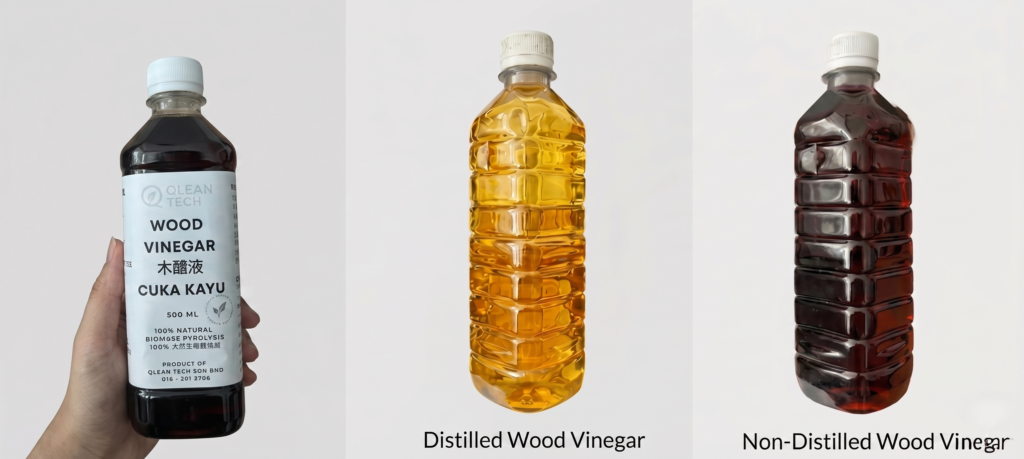
Pyroligneous acid is the technical name for the versatile natural input commonly known as wood vinegar. It is a liquid biomaterial produced through the biomass pyrolysis process and is essentially captured and condensed smoke from the thermal decomposition of organic material. Rich in over 300 organic compounds, including acetic acid, methanol, phenols, and esters, wood vinegar has a distinctive smoky aroma and sour taste. In appearance, non-distilled wood vinegar is typically dark red to reddish-brown, while distilled wood vinegar is usually lighter and more yellowish in color.
Here’s a side by side comparison of distilled and non-distilled wood vinegar:
| Aspect | Distilled | Non-Distilled |
|---|---|---|
| Processing | Undergoes further distillation to remove tar, heavy oils, and impurities | Raw liquid collected directly from pyrolysis without refinement |
| Purity | Higher purity; fewer suspended particles and less odor | Contains more organic compounds, tar, and phenols |
| Color | Light yellow to golden | Dark red to reddish-brown |
| Odor | Milder, cleaner smell | Stronger, smoky odor |
| Chemical Composition | Lower in heavy fractions; mainly acetic acid and light organics | Richer in phenols, tar, and heavier compounds |
| Applications | Household/agriculture: natural pesticide, deodorizer, soil conditioner, animal husbandry | Agriculture, swiftlet farming, composting, household pest control, and industrial uses (fuel additives, wood preservation) |
| Storage Stability | More stable, less residue formation | Can form sediments and tar over time |
Key Benefits of Wood Vinegar
Wood Vinegar’s broad range of applications makes it a valuable natural solution for agriculture, environmental restoration, and industrial processes.
Enhances Plant Growth
Improves nutrient absorption, stimulates root development, and promotes stronger, healthier crops.
Natural Pest Control
Acts as an organic repellent against insects, fungi, and common household pests — without harmful chemicals.
Boosts Soil Fertility
Stimulates beneficial microbial activity and improves soil structure over time.
Odor Reduction & Composting
Neutralizes ammonia and other unpleasant smells. Accelerates compost decomposition.
Eco-Friendly & Sustainable
Derived from renewable biomass through pyrolysis — a zero-waste process.
Common Wood Vinegar Use Cases
Agriculture & Farming
- Soil Improvement & Fertilization – Enhances soil structure, boosts microbial activity, and improves nutrient uptake for healthier crops.
- Plant Growth & Pest Management – Stimulates seed germination, strengthens root systems, and naturally deters pests and fungal disease.
- Composting Booster – Speeds up decomposition, reduces compost odor, and improves overall compost quality.
- Chemical Reduction – Regular use can reduce reliance on synthetic pesticides and fertilizers by up to 50%.

Swiftlet Farming (燕子养殖)
- Odor Control & Hygiene – Neutralizes ammonia buildup and keeps nesting areas fresh for healthier colonies.
- Antimicrobial Spra – Inhibits mold, bacteria, and fungi in enclosed swiftlet environments.

Household Cleaning
- Eco-Friendly Surface Cleaner – Cuts grease, removes stains, and leaves a mild deodorizing effect.
- Natural Pest Deterrent– Repels ants, cockroaches, and other common household pests safely and naturally.
Packaging & Pricing
| Size | Format | Price (from) | Best For |
|---|---|---|---|
| 500ml | Bottle | RM3.80 | Home use, trial & sampling |
| 20L | Jerry Can | RM35.00 | Smallholders, regular farm use |
| 1,000L | IBC Tank | RM1,500.00 | Plantations, commercial operations |
Note: Surcharges may apply for bulk delivery depending on location and logistics planning. Contact us for a quote.
Storage Tips
Store wood vinegar in a sealed container in a cool, shaded place away from direct sunlight. Avoid prolonged heat exposure to help maintain product quality over time.
How to Use Wood Vinegar (Cuka Kayu)
For Agricultural & Farm Use
Use a standard 20L fertilizer spray tank. Mix wood vinegar with water according to purpose:
| Purpose | Dilution (per 20L water) | Method | Frequency |
|---|---|---|---|
| General plant growth | 50ml | Spray on leaves, stems, and surrounding soil | Once a week |
| Pest & fungal control | 100ml–150ml | Spray directly on affected areas and foliage | Once a week or as needed |
| Soil conditioning | 150ml–200ml | Drench onto soil around root zone | Every 2 weeks |
| Composting accelerator | 200ml | Spray over compost pile | Each time new material is added |
| Weed suppression | Use undiluted or at high concentration | Spray directly on weeds | As needed |
Tips:
- For best results, spray early morning or late afternoon to avoid leaf burn from direct sunlight.
- Reapply after rain or increase the frequency during the rainy season.
- Visible improvements in plant health are typically noticeable after 4–6 weeks of consistent application.
- Wood vinegar can be mixed with most organic fertilizers.
For Household & General Use
| Purpose | Dilution | Method |
|---|---|---|
| Surface cleaning & deodorizing | 1:10 dilution | Wipe or spray on surfaces |
| Stronger pest repellent | Use higher concentration or undiluted for targeted areas | Spray around entry points (doors, windows, drains) |
| Shoe & pet area odor removal | 1:10 dilution | Spray and let air dry |
| Drain & bin odor control | A small splash undiluted | Pour into drains or spray inside bins |
Tip:
Adjust the ratio depending on how strong you want the smoky aroma. A higher concentration gives stronger pest-repelling effects.
For Swiftlet Farming
| Purpose | Dilution | Method |
|---|---|---|
| General hygiene & odor control | 1:10 to 1:20 dilution | Mist or spray nesting areas |
| Antimicrobial treatment | 1:5 to 1:10 dilution | Spray walls, floors, and nesting planks |
Tip:
Spray during off-peak hours when birds are out foraging. Allow areas to air dry before birds return.
Note: Dilution ratios above are general guidelines based on common usage. Actual results may vary depending on conditions. Please adjust accordingly and contact us for specific recommendations.
Frequently Asked Questions
What is wood vinegar (cuka kayu / 木醋液)?
Wood vinegar is a natural reddish-brown liquid produced during pyrolysis — the process of heating biomass (such as wood or agricultural waste) in the absence of oxygen. It contains over 300 organic compounds including acetic acid, phenols, and esters, giving it antimicrobial, pest-repellent, and growth-boosting properties.
What is the difference between distilled and non-distilled wood vinegar?
Non-distilled wood vinegar is the raw liquid from pyrolysis, darker and stronger, while distilled wood vinegar is further purified to remove heavier compounds, giving it a lighter colour and cleaner profile for household use. At the moment, Qlean Tech only supplies non-distilled wood vinegar.
Where can I buy Qlean Tech wood vinegar?
Our 500ml bottles are available for direct purchase on Shopee Malaysia: https://shopee.com.my/qleantechsdnbhd
For 20L jerry cans or 1,000L IBC tank orders, contact us via WhatsApp +60162912399 for bulk quote.
Where do you deliver to?
Shopee orders follow the platform’s standard shipping coverage across Malaysia. For bulk orders (20L and above), delivery is arranged separately — surcharges may apply depending on location and logistics requirements. Contact us for a delivery quote.
Is wood vinegar available for bulk purchase?
Yes. Qlean Tech wood vinegar is available in 1,000L IBC tanks, ideal for plantations, large-scale farms, composting facilities, and commercial operations. Contact us directly for bulk pricing and delivery arrangements.
Is wood vinegar safe for organic farming?
Wood vinegar is a natural, chemical-free product derived entirely from biomass pyrolysis. It is widely used in organic and sustainable farming practices.
Can I mix wood vinegar with other fertilizers or pesticides?
Wood vinegar can generally be mixed with most organic fertilizers and chemical pesticides. However, avoid mixing with strongly alkaline products, as this may reduce effectiveness. When in doubt, test a small batch first before proceeding for full-scale applications.
How soon will I see results on my crops?
With consistent weekly application, most users or farmers begin to observe improvements in plant vigor, root strength, and pest reduction within 4 to 6 weeks. Results vary depending on crop type, soil condition, and application consistency.
What is the shelf life of wood vinegar, and how should it be stored?
Wood vinegar has a long shelf life when stored properly. Keep it in a cool, shaded area away from direct sunlight, in a sealed container. Under proper storage conditions, it can remain effective for several years.
Expanded Applications of Wood Vinegar
- Agriculture & Organic Farming: Used as a bio-stimulant to enhance plant growth and soil health.
- Wood Preservation: Protects wood from rot, insects, and decay, serving as a natural preservative.
- Medicinal Uses: Traditionally used to treat skin infections, wounds, and respiratory issues.
- Food Processing: Acts as a natural flavor enhancer and preservative in certain food products.
- Animal Husbandry: Added to livestock feed to improve digestion and overall health.
- Wastewater Treatment: Helps in removing contaminants from industrial effluents.
- Industrial Applications: Used in dyeing processes, odor control, and chemical refinement.
Ready to Get Started?
Start using Qlean Tech Wood Vinegar today — whether you’re growing crops, managing a swiftlet house, or looking for a natural cleaning solution at home.