
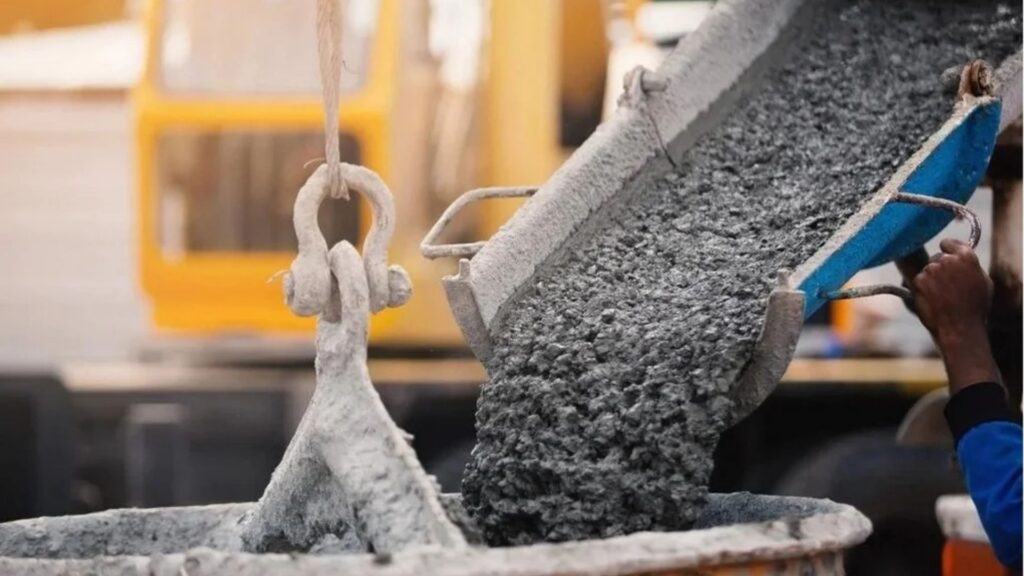
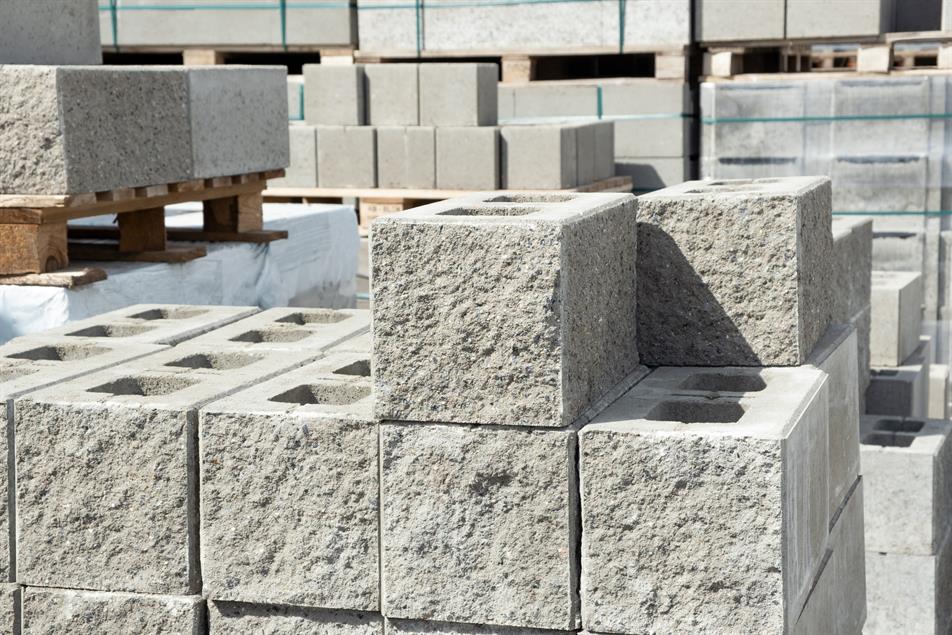
As the construction sector continues to drive global growth, it also remains one of the most carbon-intensive industries. The production of Portland cement alone is estimated to contribute around 8% of global CO₂ emissions. Among emerging material innovations within biochar’s industrial applications, cementitious materials represent one of the most promising and scalable use cases. Traditional decarbonization strategies focus on energy efficiency and alternative fuels, but material innovations, notably the biochar integration in cement and concrete, such as the Biochar-Augmented Concrete are gaining attention as dual-benefit solutions.
Biochar is a carbon-rich material derived from biomass pyrolysis, making it a promising low-carbon additive for cementitious materials. In cement applications, it is typically used not as a full cement replacement, but as a green additive or partial substitute for fine aggregates or cement at low percentages, creating a more sustainable composite. This approach simultaneously lowers embodied carbon and can improve mechanical and durability properties.
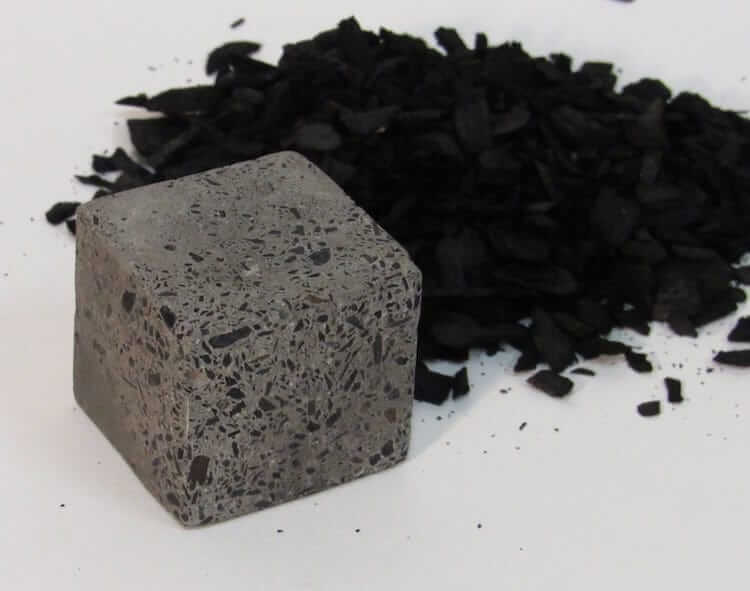
Mechanical Performance and Strength Benefits
One of the key drivers for integrating biochar into cement is its influence on mechanical strength. Across multiple experimental studies, low-to-moderate biochar replacement levels consistently demonstrate measurable improvements in cement and concrete mechanical performance when properly designed.
Optimized Replacement Levels
A review of biochar-augmented concrete reported that adding biochar at 5–10% replacement levels can increase compressive strength by up to 18.7% compared to control mixes, due in part to biochar’s micro-filler effect and its role in refining the cement matrix, thus resulting in a denser and more compact microstructure. Beyond compressive strength, biochar incorporation also improves flexural strength by 23.1% and fracture energy by 78%. This enhancement is due to biochar particles acting as toughening agents that deflect cracks and inhibit their propagation.
Experimental Case Studies
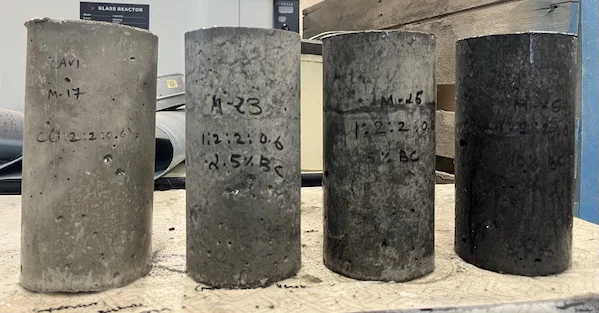
Another study published on PubMed Central demonstrated that 2 wt% biochar increased compressive, tensile, and flexural strength by roughly 18.95%, 19.64%, and 12%, respectively, showing that even low biochar doses can deliver measurable benefits.
Higher biochar (e.g., 10 wt%) has been shown to increase strength up to 24.2%. This improvement is attributed to the promotion of cement hydration reactions, increased formation of calcium carbonate and C–S–H gel during carbonation curing, and microstructural densification caused by biochar’s pore-filling and nucleation effects, which together result in a stronger and more compact cement matrix.
These enhancements are often attributed to biochar’s porous structure and surface chemistry, which provide additional nucleation sites for cement hydration products, thereby improving internal bonding and matrix densification.
Carbon Sequestration
Biochar concrete has gained attention not only for its structural properties, but also for its ability to transform conventional concrete into a carbon-storing material through biochar sequestration and enhanced carbonation curing. By incorporating biochar into cement, the construction industry is able to make a positive impact on reducing greenhouse gas emissions.
Studies have shown that cement composites containing 10 wt% biochar achieved approximately 6% CO₂ uptake after 28 days of accelerated carbonation curing. This occurs through mineral carbonation, where CO₂ reacts with calcium hydroxide to form stable calcium carbonate within the matrix. A life-cycle assessment study shows that replacing 10 wt% cement with biochar can reduce net CO₂ emissions by ~17–19%. Beyond carbonation, biochar itself contains stable biogenic carbon that can persist for decades to centuries when embedded in solid materials.
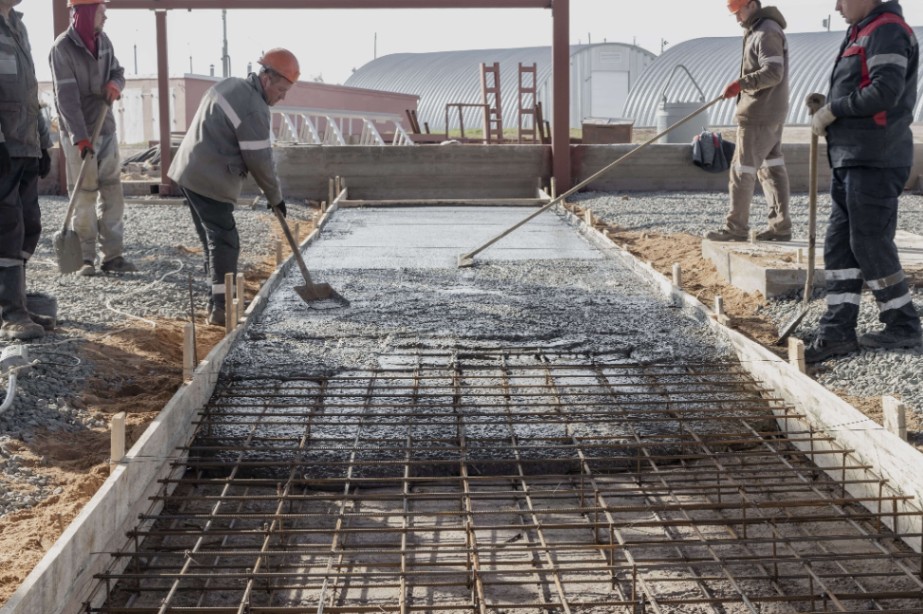
Therefore, biochar concrete has vast potential in enhancing structural performance, while also contributing to the reduction of environmental impacts. Together, these findings highlight the promising role of biochar concrete as a pivotal component in sustainable construction, paving the way for a more environmentally friendly and resilient construction industry.
Scaling Biochar for Industrial Cement Applications
Localized Feedstock & Biomass Supply
Malaysia has a substantial and diverse supply of agricultural and plantation biomass residues. This makes the country well-positioned for localized biochar production. Palm oil mills generate abundant lignocellulosic biomass including empty fruit bunches (EFB) and palm kernel shells (PKS), which are popular feedstock for biochar production in biomass pyrolysis processes. According to Malaysian National Biomass Action Plan 2023-2030, oil palm mill residues such as EFB and PKS account for millions of tonnes annually, highlighting the potential feedstock availability for industrial pyrolysis systems.
Technical Consistency & Quality Control
For cement and concrete applications, consistent biochar quality is a key enabler of reliable performance. Parameters such as fixed carbon content, ash levels, and particle size distribution can be effectively managed through controlled pyrolysis systems and feedstock selection, allowing biochar properties to be tailored for cementitious use. In concrete mix design, biochar’s porous structure can be accommodated through established approaches such as water management strategies, admixture use, or pre-conditioning, enabling performance targets to be met without major changes to existing production workflows.
Strategic Policy & Market Opportunities
In Malaysia, the increasing adoption of green building frameworks such as the Green Building Index (GBI) and MyCREST presents a clear opportunity for cement manufacturers to pursue biochar integration, as these frameworks reward lower embodied carbon and verifiable sustainability performance. Besides, incorporating biochar concrete in construction can also help developers earn sustainability credits, further strengthening projects’ positioning and marketability.
Looking Ahead: Market Potential and Climate Impact
Multiple researches and studies increasingly indicate that integrating biochar into cementitious products — even at modest replacement levels — can contribute significantly to embodied carbon reductions without compromising performance. As demand for low-carbon construction materials grows, biochar-enhanced concrete is emerging as a practical pathway for the cement and construction sectors to meet sustainability expectations without disruptive changes to existing production processes.
In Malaysia, this trend creates a tangible opportunity across the construction value chain, particularly for concrete manufacturers and property developers seeking to differentiate projects using verifiable sustainability metrics. Growing emphasis on embodied carbon in infrastructure procurement and green building frameworks further strengthens demand for low-carbon material solutions.
Incorporating biochar into cement provides dual climate benefits: reducing emissions associated with clinker production and sequestering carbon in the hardened concrete for decades. Supported by Malaysia’s abundant biomass resources — including palm oil residues such as EFB and PKS, bamboo, coconut shells, and wood waste — biochar-enhanced cement represents a scalable market opportunity with measurable climate impact.
Moving from Research to Real-World Application
As biochar-enhanced cement moves from laboratory studies to industrial adoption, access to consistent, application-ready biochar becomes a critical success factor. Translating performance data into real-world construction outcomes requires material quality, process control, and technical alignment with cement and concrete systems.
At Qlean Tech, we support industry stakeholders in deploying biomass pyrolysis systems and supplying high-quality biochar for construction applications. Our focus is on bridging scientific research with industrial-scale implementation, enabling low-carbon construction solutions that perform reliably in commercial environments.