

On this page
Soil fertility is a critical factor influencing agricultural productivity in Malaysia, particularly in tropical soils that are prone to low organic matter content, nutrient leaching, and declining fertiliser efficiency under high rainfall conditions. Biochar has emerged as a promising long-term soil amendment to enhance soil productivity, offering a practical solution to improve nutrient retention, soil structure, and overall soil resilience. Rather than acting as a conventional fertiliser, biochar works by enhancing the soil environment, making existing nutrients more available and effective over time. When integrated with established nutrient management practices, biochar supports sustainable crop production in tropical agricultural systems.

In Malaysia, many agricultural soils are classified as highly weathered tropical soils, such as Ultisols and Oxisols, which are characterised by acidic pH, low organic matter content, and limited nutrient-holding capacity. High annual rainfall further accelerates nutrient leaching, reducing fertiliser efficiency and increasing input costs for farmers. These soil constraints make long-term nutrient availability management particularly challenging and highlight the need for soil amendments that improve nutrient retention rather than simply supplying additional nutrients. Within this context, biochar for soil fertility offers a practical and site-appropriate solution for enhancing soil function in tropical agricultural systems.
Benefits of Biochar for Soil Fertility
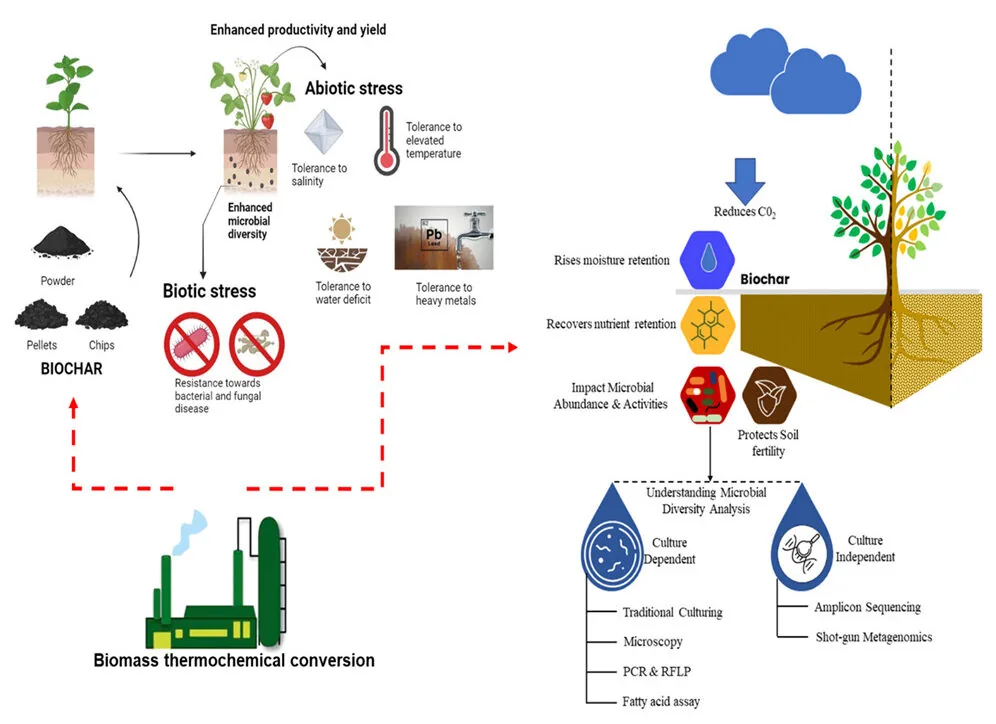
Biochar enhances soil productivity through physical, chemical, and biological mechanisms.
Physical Structure & "Black Gold"
Biochar enhances soil fertility through a combination of physical, chemical, and biological mechanisms that improve nutrient availability and soil structure for crops. Its highly porous structure increases soil aeration and pore space, improving water infiltration and retention while supporting root development and microbial activity. Biochar has been described as the “black gold” in agriculture, and research has shown that it can promote crop development even under stress conditions such as salinity.

Chemical Balance & Microbial Habitats
Beyond its physical structure, biochar can also influence soil chemical properties that are critical for fertility in tropical regions. Many biochars exhibit a liming effect, helping to raise soil pH in acidic soils and reduce aluminium toxicity, which can otherwise restrict root growth and nutrient uptake. Biochar also provides favourable habitats for beneficial soil microorganisms, including bacteria and mycorrhizal fungi, which play key roles in nutrient cycling and organic matter stabilisation. By supporting biological activity alongside improved nutrient retention, biochar enhances soil fertility through integrated physical, chemical, and biological pathways.

Nutrient Efficiency & Long-Term Stability
In addition, biochar’s high cation exchange capacity enables it to retain essential nutrients such as nitrogen, phosphorus, and potassium, reducing nutrient leaching in high-rainfall tropical soils and improving fertiliser use efficiency. Its stable carbon structure resists decomposition, allowing biochar to persist in soil for decades while supporting long-term nutrient cycling and microbial habitats. Together, these properties make biochar a valuable soil amendment that improves fertility, enhances water retention, and stabilises nutrient dynamics across multiple cropping seasons.

Practical Applications of Biochar in Agricultural Soils
(Source: iScience)
Broadcasting & Soil Incorporation
Biochar can be applied to agricultural soils using several methods, and its effectiveness depends strongly on how it is placed and incorporated into the soil profile. Common application techniques include broadcasting biochar across the soil surface prior to tillage, as well as furrow or band application that places biochar directly within planting rows to concentrate its effects near the root zone. Research indicates that incorporating biochar into the soil rather than leaving it on the surface improves soil–biochar contact, enhances nutrient retention, and supports better root–soil interactions.
Furrow, Banding & Co-application
Biochar is often applied together with mineral fertilisers or organic amendments such as compost or manure, as co-application improves nutrient use efficiency and reduces nutrient losses in soils with low inherent fertility. Application rates vary depending on crop type and soil condition, with higher rates often used in degraded or nutrient-deficient soils to achieve measurable improvements in fertility. Adapting application methods and rates to local soil texture, crop requirements, and management practices is essential to maximise agronomic benefits and long-term soil fertility.
Long-term Sustainability & Soil Health
By improving soil fertility and structure, biochar not only supports crop productivity but also contributes to long-term soil health and carbon sequestration, linking agronomic benefits with sustainability goals in Malaysian tropical agriculture. In practical field applications, biochar delivers strong agronomic benefits when application methods and rates are tailored to local soil conditions and farming systems. By aligning biochar use with soil texture, fertility status, crop requirements, and management goals, farmers can achieve more consistent improvements in soil fertility, nutrient efficiency, and long-term soil performance.
Biochar and Its Impact on Crop Yields
Biochar has been extensively studied for its effects on crop productivity, with results generally indicating yield improvements driven by enhanced soil fertility, water retention, and nutrient availability. Meta-analyses show that yield responses to biochar are highly context-dependent, influenced by factors such as soil type, climate, crop species, and application rate. Under favourable conditions, average yield increases of approximately 10–15% have been reported, although outcomes can vary significantly depending on site-specific conditions.
Biochar can improve soil water availability, particularly in sandy or degraded soils, helping crops better withstand dry periods by reducing drought stress. In Malaysia, studies have reported positive yield responses in paddy, vegetables, and oil palm when biochar is applied alongside conventional fertilisers, highlighting its relevance for tropical agriculture. Yield benefits tend to be most pronounced in nutrient-poor or degraded soils, where biochar addresses key soil constraints and improves long-term soil performance.
Future of Soil Fertility Enhancement with Biochar in Malaysia
(Source: Frontiers)
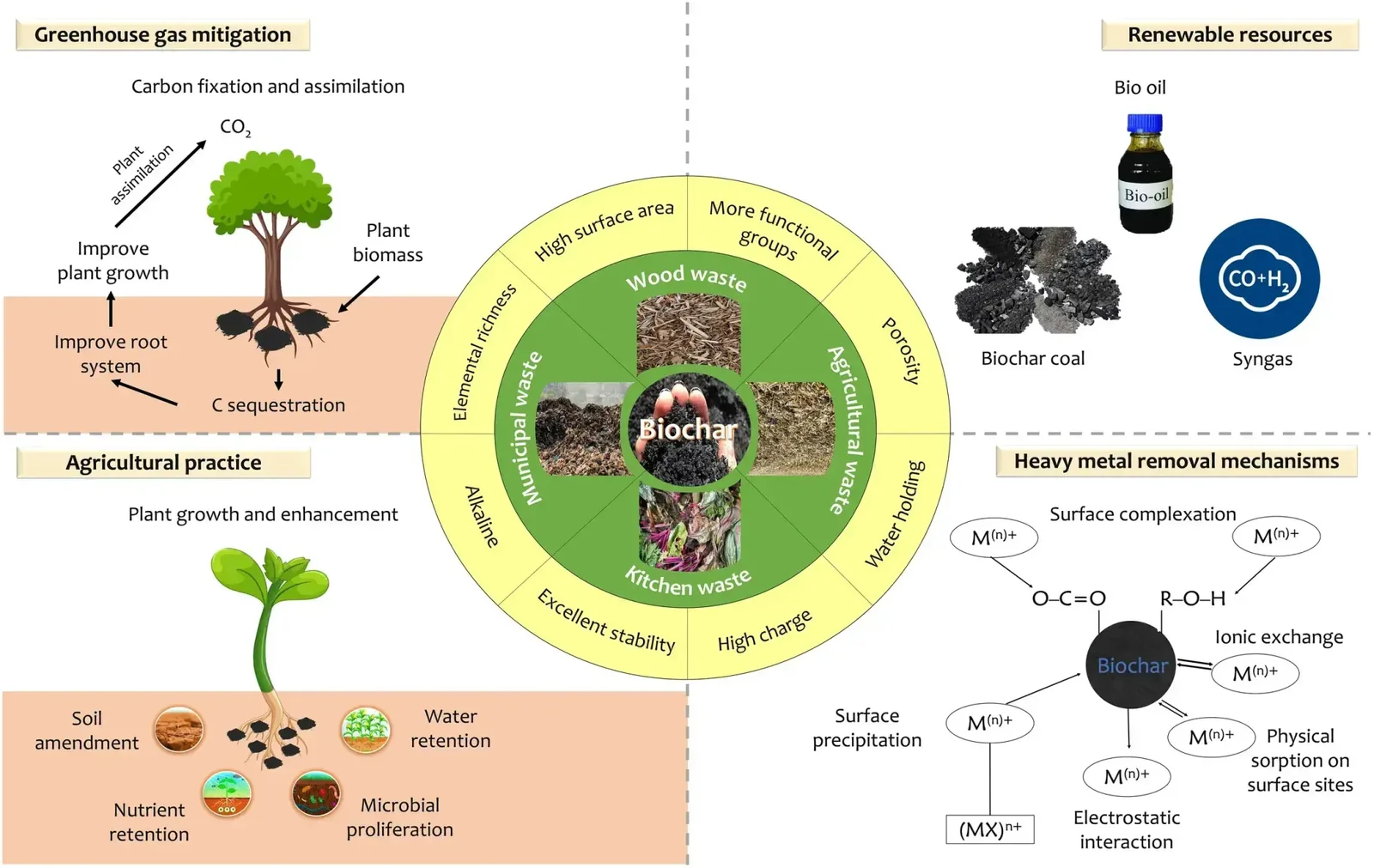
As Malaysian agriculture faces increasing challenges related to soil degradation, nutrient leaching, and climate variability, biochar offers a long-term approach to improving soil fertility and crop resilience. By enhancing nutrient retention, water-holding capacity, and soil biological activity, biochar supports sustainable productivity in tropical farming systems. Leveraging locally available agricultural residues — such as palm oil biomass like empty fruit bunches (EFB) and palm kernel shells (PKS), bamboo, coconut shells, and forestry wood waste — to produce biochar, provides an opportunity to improve soil health while contributing to climate-smart agriculture and resource efficiency.
With appropriate application strategies, biochar has the potential to become a foundational tool for maintaining fertile, productive soils in Malaysia. Its ability to deliver agronomic benefits while supporting long-term soil function positions biochar as a practical solution for sustainable soil fertility management in tropical agricultural systems.

